
You can't improve what you don't measure. That sounds like a cliche, but it's the entire reason web analytics exists, and why it's one of the most underused tools sitting in most businesses' marketing stack.
Most business owners have Google Analytics installed on their website. Far fewer are actually using it to make decisions.
This gap is real. According to HubSpot's 2026 State of Marketing Report, nearly 1 in 5 marketers say building a truly data-driven strategy is one of their biggest challenges, even though most feel confident in the quality of the data they're collecting. Having the data isn't the hard part. Turning it into a consistent, working strategy is. That gap between having data and trusting it is exactly where most businesses lose the value of their analytics investment.
This guide walks through what web analytics actually is, why it matters for your marketing and your bottom line, and the key metrics you should be tracking regardless of your industry or business size.
What Is Web Analytics?
Web analytics is the process of collecting, measuring, and analyzing data about how people interact with your website. That includes where visitors come from, what pages they view, how long they stay, what actions they take, and where they drop off.
Tools like Google Analytics 4 (GA4), which currently dominates the web analytics space, capture this data automatically once installed. But the tool itself isn't the value. The value comes from turning that raw data into decisions: which pages to fix, which marketing channels to invest in, and which parts of your website are quietly costing you customers.
Why Web Analytics Matters in Digital Marketing
1. It tells you what's actually working
Without analytics, marketing decisions are guesswork. With it, you can see exactly which channels (organic search, paid ads, email, social) are driving traffic, and more importantly, which ones are driving conversions. This matters because traffic and conversions don't always come from the same places. A channel that brings in a lot of visitors isn't necessarily the one bringing in customers.
2. It shows you where customers are getting stuck
Every website has friction points: a confusing checkout step, a slow-loading page, a call to action that's easy to miss. Web analytics surfaces these problems by showing you exactly where visitors drop off in their journey, so you can fix the specific step that's costing you conversions instead of guessing at a full redesign.
3. It justifies (or challenges) your marketing spend
If you're spending money on ads, SEO, or social campaigns, analytics is how you prove ROI. It's also how you catch underperforming campaigns early, before they burn through budget. In a market where digital advertising spend keeps climbing, being able to show which dollars are actually working matters more every year.
4. It supports better, faster decisions across the business
Web analytics isn't just for marketers. Product teams use it to see which features get used. Sales teams use it to understand what content their prospects engage with before reaching out. Leadership uses it to track whether the website, often the first impression of the whole business, is doing its job.
5. It's foundational to CRO and A/B testing
You cannot run effective conversion rate optimization or A/B testing without solid analytics underneath it. Every hypothesis you test should be based on a real pattern in your data, not a hunch. Businesses that skip this step often end up testing changes that look good in theory but don't move the metrics that actually matter.
Key Web Analytics Metrics to Track
Not every metric matters equally, and tracking too many at once is a common mistake that leads to information overload rather than clarity. Here are the metrics worth prioritizing.
Traffic and acquisition metrics
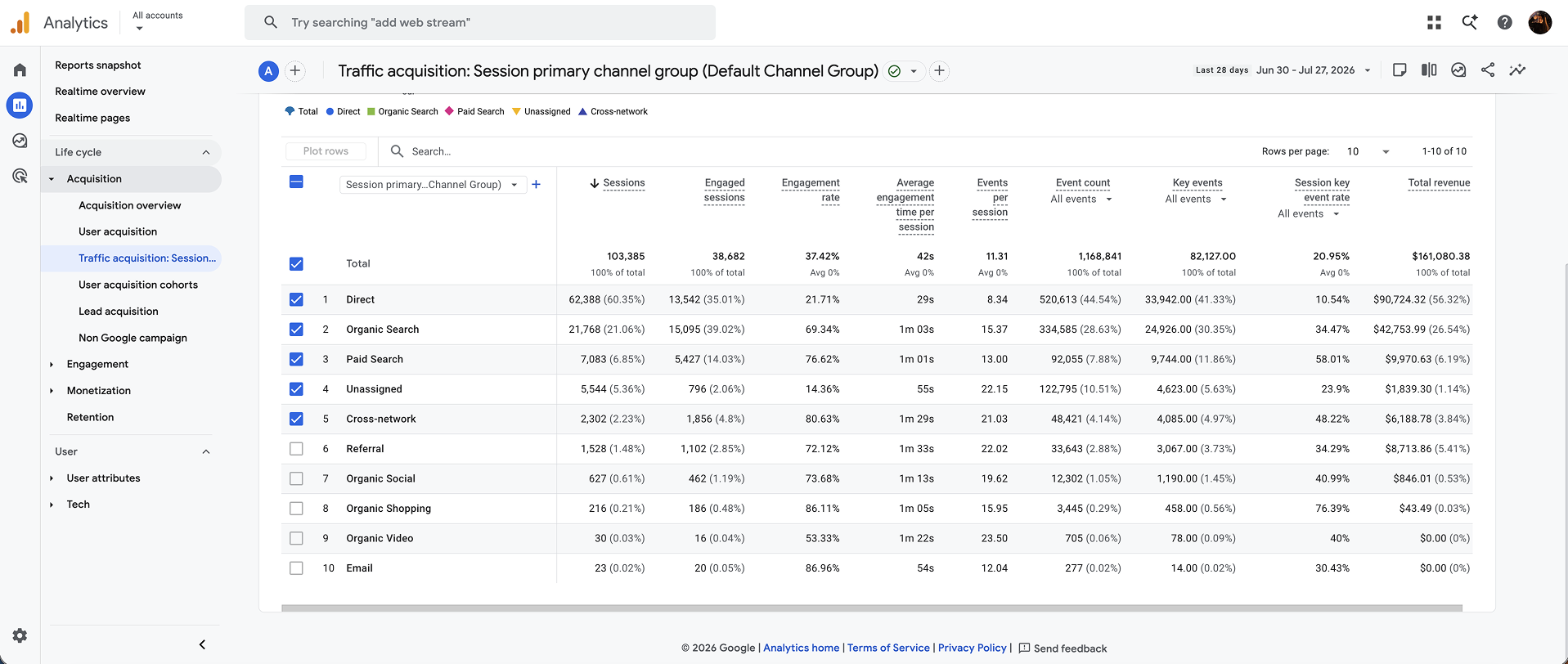
- Sessions and users. How many visits, and how many unique people, are coming to your site. Useful as a baseline, but weak on its own without context.
- Traffic sources. Where visitors come from: organic search, paid search, social, referral, direct, or email. This tells you which channels deserve more investment and which need attention.
- New vs. returning visitors. A healthy site usually has a mix of both. Too few returning visitors can signal weak retention or brand recall.
Engagement metrics
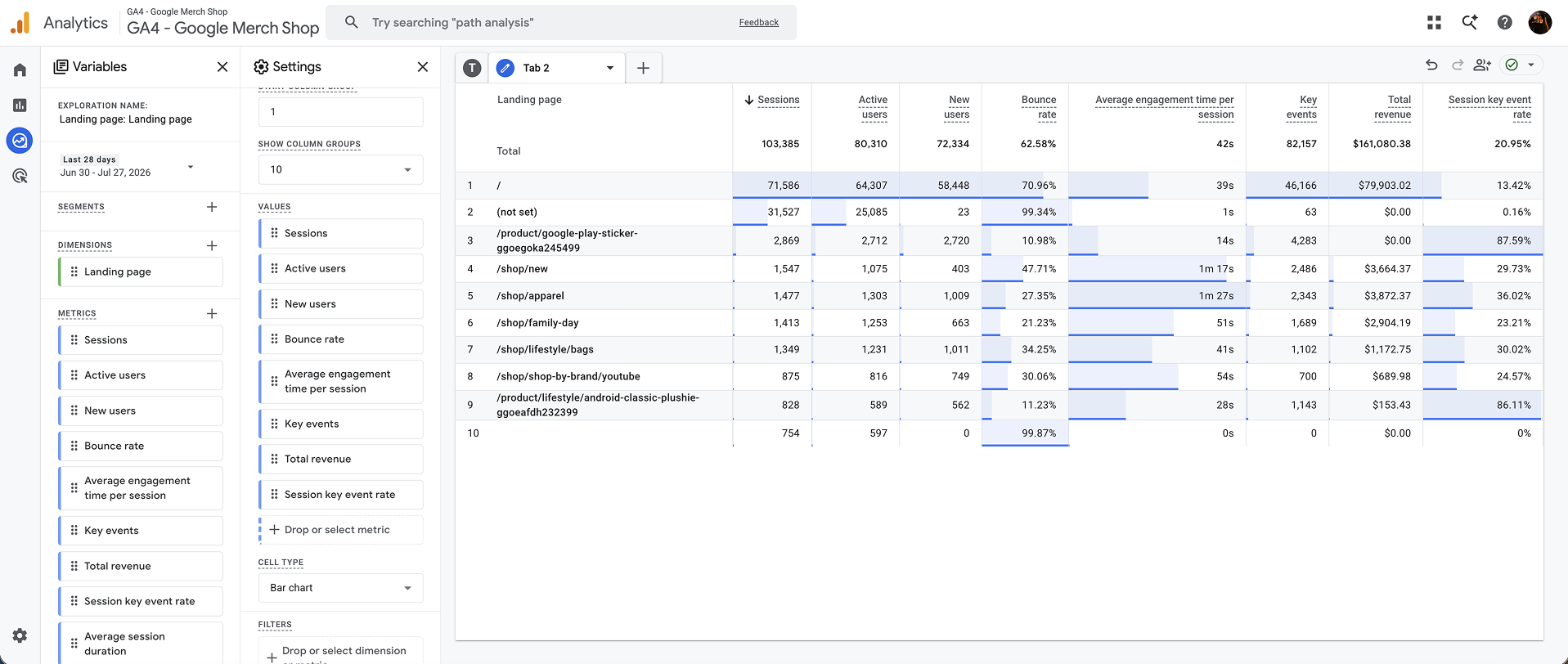
- Bounce rate / engagement rate. How many visitors leave without interacting, versus how many actually engage with your content. A high bounce rate on a landing page usually points to a mismatch between what visitors expected and what they found.
- Average engagement time. How long visitors actively spend on your site. Short engagement times on key pages, like product or service pages, often signal a content or clarity problem.
- Pages per session. How many pages a visitor views before leaving. This can indicate how well your internal linking and navigation guide people toward what they need.
Conversion metrics
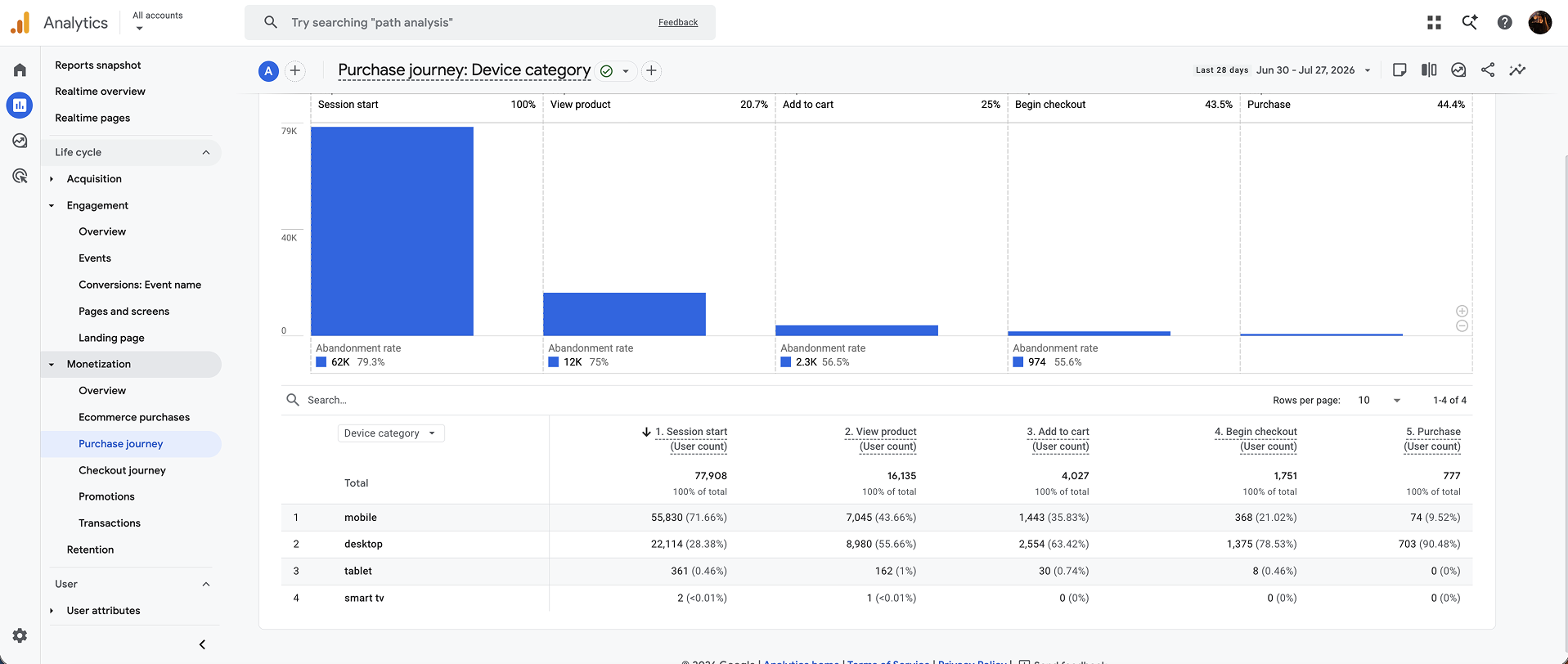
- Conversion rate. The percentage of visitors who complete a desired action: a purchase, a form submission, a booked consultation, a newsletter sign-up. This is usually the most important metric on the list, since it connects traffic directly to business outcomes.
- Goal completions / key events. Specific actions you've defined as valuable, tracked individually so you can see which parts of the funnel are converting and which aren't.
- Cart or form abandonment rate. For ecommerce or lead-gen sites, this shows exactly where people start an action and don't finish it, often one of the highest-impact areas to optimize.
Cost and value metrics
- Customer acquisition cost (CAC). How much you're spending, across all channels, to acquire a single customer. Essential for understanding whether your marketing is actually profitable.
- Traffic-to-lead and lead-to-customer rate. These break your funnel into stages, helping you pinpoint whether your problem is attracting the right traffic, converting that traffic into leads, or converting leads into paying customers.
Retention metrics
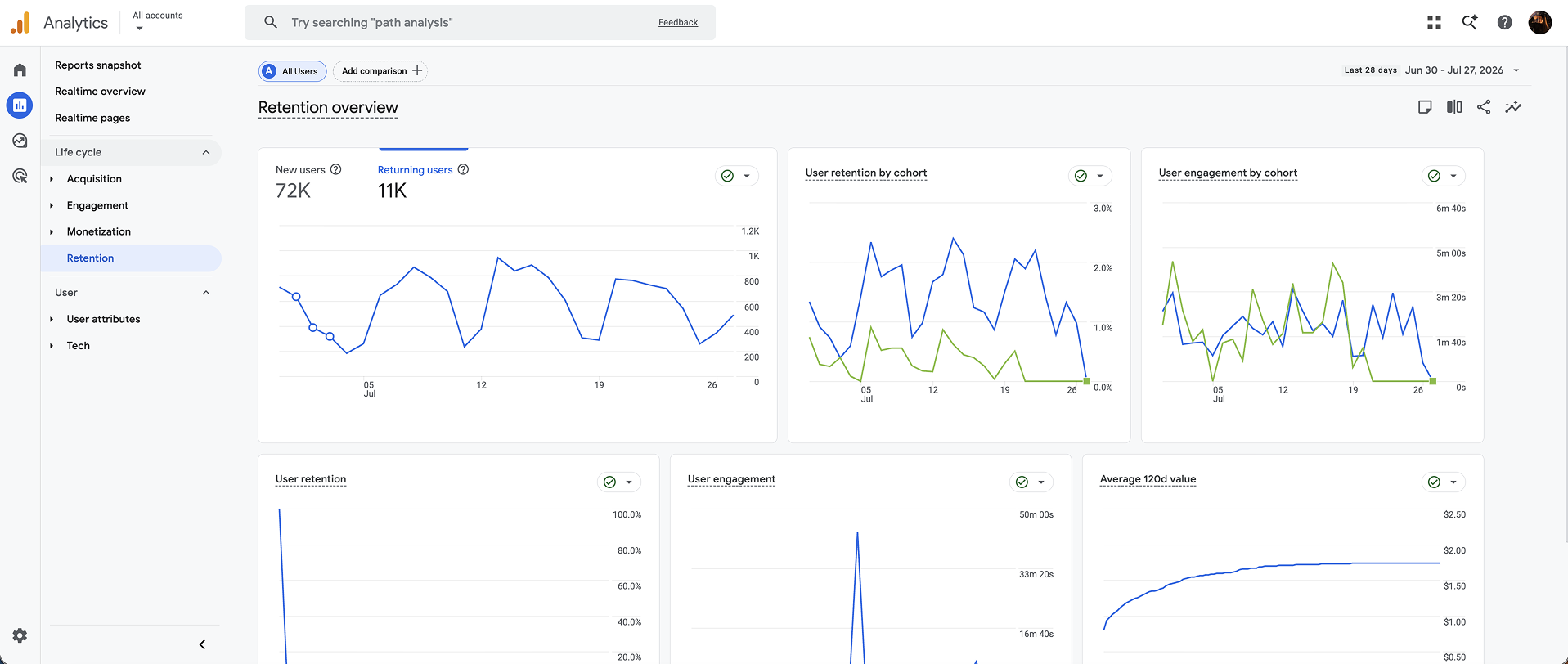
- Returning customer rate. How many customers come back for a second purchase or interaction. Often cheaper to grow than acquiring new customers, and a strong signal of brand and product fit.
- Email or newsletter engagement. Open and click rates from your website's email sign-ups, showing whether the audience you're capturing is actually engaged.
Common Web Analytics Mistakes to Avoid
- Tracking everything, prioritizing nothing. Dashboards full of metrics with no clear priority lead to analysis paralysis. Pick a small set of core metrics tied to your actual business goals.
- Looking at data without segmenting it. An overall conversion rate can hide major differences between traffic sources, devices, or visitor types. Always segment before drawing conclusions.
- Not setting up goals or events properly. If key actions like form submissions or purchases aren't tracked correctly, your entire dataset can be misleading without you realizing it.
- Treating analytics as a monthly report instead of an ongoing tool. The businesses that get the most value check their data regularly and use it to inform decisions in real time, not just for quarterly reporting.
How to Get Started with Web Analytics
- Set up your tracking properly. Make sure Google Analytics 4 (or your platform of choice) is correctly installed, with goals or key events configured for the actions that matter to your business.
- Define your core metrics. Choose 5 to 10 metrics that actually connect to business outcomes, not just vanity numbers like total pageviews.
- Build a simple, regular reporting habit. Weekly or monthly check-ins are usually enough to catch trends early, without becoming a full-time job.
- Segment your data. Break down performance by channel, device, and visitor type to find the insights that a blended, top-line number will hide.
- Turn insights into action. Every piece of data should lead to a decision: a page to fix, a channel to invest in, or a test to run. Data without action is just noise.
Web Analytics Is the Foundation of Good CRO
Here's the connection many businesses miss: you can't optimize what you haven't measured properly. Every effective conversion rate optimization strategy starts with clean, well-segmented analytics data. Without it, A/B tests are based on guesses instead of evidence, and it becomes almost impossible to prove whether a redesign, a new landing page, or a UX change actually moved the needle.
If your business is investing in SEO, paid media, or a website redesign without solid analytics behind it, you're likely making decisions with far less confidence than you should be.
Final Thoughts
Web analytics isn't just a reporting tool, it's the foundation that good marketing decisions are built on. The businesses that consistently grow online aren't the ones with the fanciest dashboards. They're the ones who track the right metrics, understand what those metrics are telling them, and use that insight to make real changes to their website and marketing.
If you're not confident your analytics setup is giving you the full picture, or you're not sure which metrics actually matter for your business, that's exactly the kind of gap a second set of expert eyes can close quickly.
Want help turning your website data into real growth? Book a free consultation with our team and we'll show you what your analytics are really telling you.
Book a Free Website Consultation
Discover quick wins for your digital strategy. 100% guaranteed.