If you think branding is just a logo and a color palette, it's time for a reset. In a market where customers can compare you to five competitors before they finish their coffee, your brand is the thing that decides whether they trust you enough to click "buy," or bounce to the next tab.
Branding used to be about being memorable in a print ad or on a billboard. Today, it has to hold up across dozens of touchpoints: your website, your Google reviews, your Instagram feed, your email subject lines, even how fast your customer service team replies on live chat. Every one of those moments either builds trust or chips away at it.
In this article, we'll break down why branding matters more than ever in a digital-first world, how it directly shapes customer perception and loyalty, and what you can practically do to strengthen yours starting this quarter.
What "Branding" Actually Means (It's More Than a Logo)
Branding is the sum total of how people experience and remember your business. That includes your visual identity (logo, colors, typography), but also your tone of voice, your website UX, your values, and the consistency of your message across every channel.
Marketing gets people to notice you. Branding decides whether they believe you, remember you, and come back. The two work together, but they are not the same thing, and confusing them is one of the most common (and costly) mistakes we see business owners make.
Why Branding Matters More in the Digital Age
1. You're competing on trust, not just visibility
Digital channels have made it easy for anyone to get in front of an audience. Ads, SEO, and social media can all buy you attention. What they can't buy you is trust, and trust is what actually drives conversions.
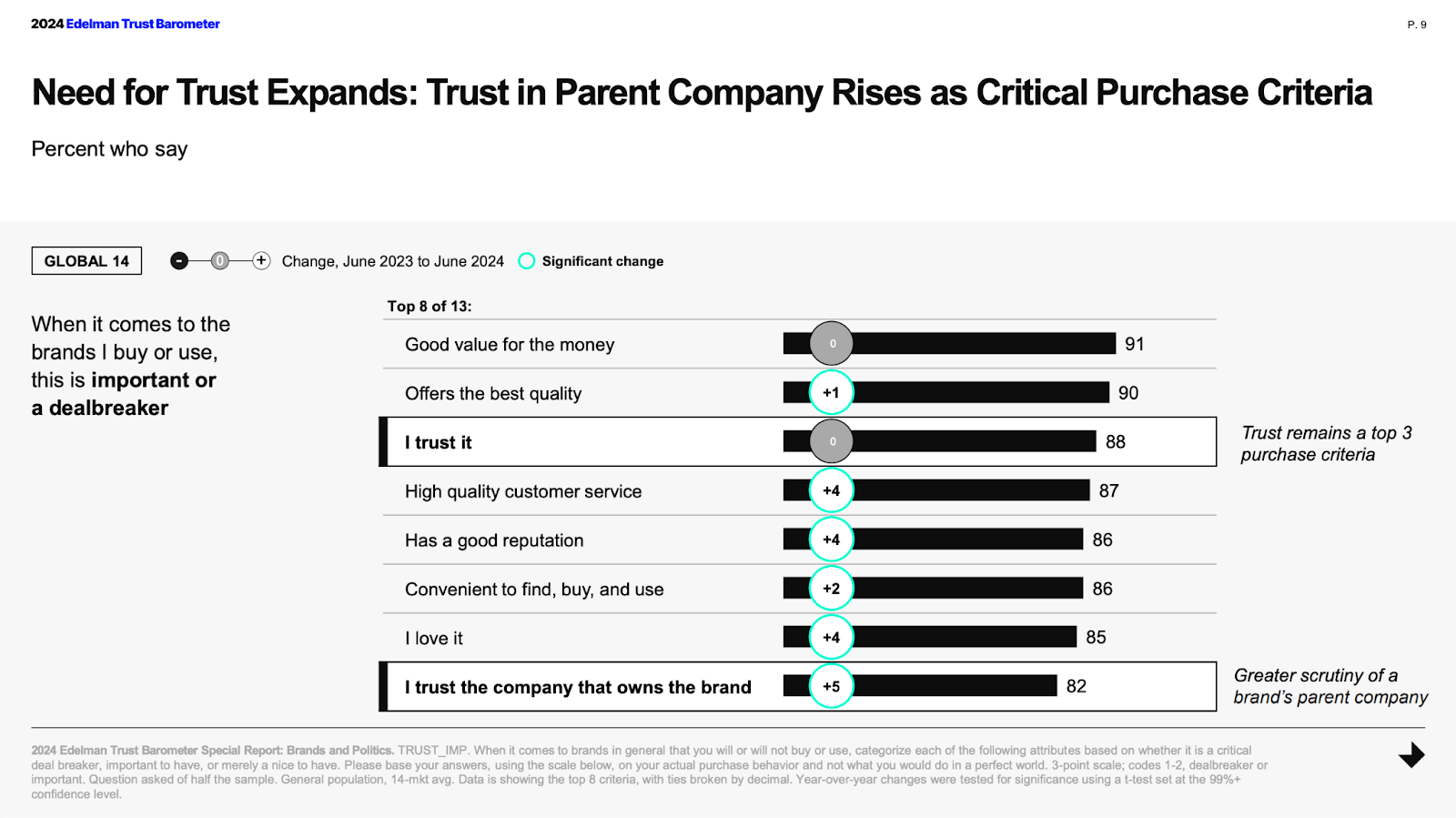
Trust is what actually drives conversions online, and the data backs this up directly. In Edelman's 2024 Trust Barometer, 88% of consumers globally say "I trust it" is an important or dealbreaking factor when deciding which brands to buy from, ranking trust just behind value for money (91%) and quality (90%), and ahead of factors like customer service or reputation. When your branding feels inconsistent, generic, or outdated, that hesitation shows up directly in your conversion rate, no matter how good your ad targeting is. Customers can't always articulate why a site feels "off," but they act on that feeling anyway, usually by leaving.
2. Customers form an opinion of you in seconds
Online, first impressions happen fast. A visitor lands on your website or sees your ad and, within seconds, makes a snap judgment about whether your business feels professional, trustworthy, and relevant to them. Visual consistency plays a huge role here. Studies on color and brand recognition suggest a distinctive, consistently used color scheme can boost brand recognition dramatically, and most snap judgments about a product or business are influenced by color alone.
This is why a polished, cohesive visual identity isn't a "nice to have." It's often the deciding factor in whether someone sticks around long enough to read your value proposition at all.
3. Multi-channel consistency compounds recognition and revenue
Most businesses today show up across a website, social platforms, email, paid ads, and sometimes a physical location. Every one of these is a chance to reinforce your brand, or to confuse people with mismatched messaging and visuals.
It typically takes several repeated impressions before a customer actually remembers a brand. If your logo, tone, and messaging shift from channel to channel, you're resetting that clock every time. On the other hand, businesses that maintain strong brand consistency across channels consistently report meaningfully higher revenue growth compared to those that don't, because familiarity reduces the friction between "I've seen this before" and "I trust this enough to buy."
4. Branding is now a factor in AI-driven discovery too
As more people use AI tools and chat-based search to research products and services, having a clear, consistent brand identity and message across the web (your site, reviews, directories, and social presence) is becoming a factor in whether AI systems recognize and recommend your business accurately. Inconsistent branding doesn't just confuse humans anymore, it can confuse the systems increasingly involved in the discovery process too.
How Branding Shapes Customer Perception
Perception is built cumulatively, not in one moment. Here's where it gets shaped most:
- Website UX and design. A cluttered, slow, or dated website signals a cluttered, slow, or dated business, even if that's not true. Your site is often the first "real" interaction someone has with your brand.
- Tone of voice. Are you formal or conversational? Playful or authoritative? Whatever it is, it needs to be consistent so customers know what to expect from you, whether they're reading a blog post or a support email.
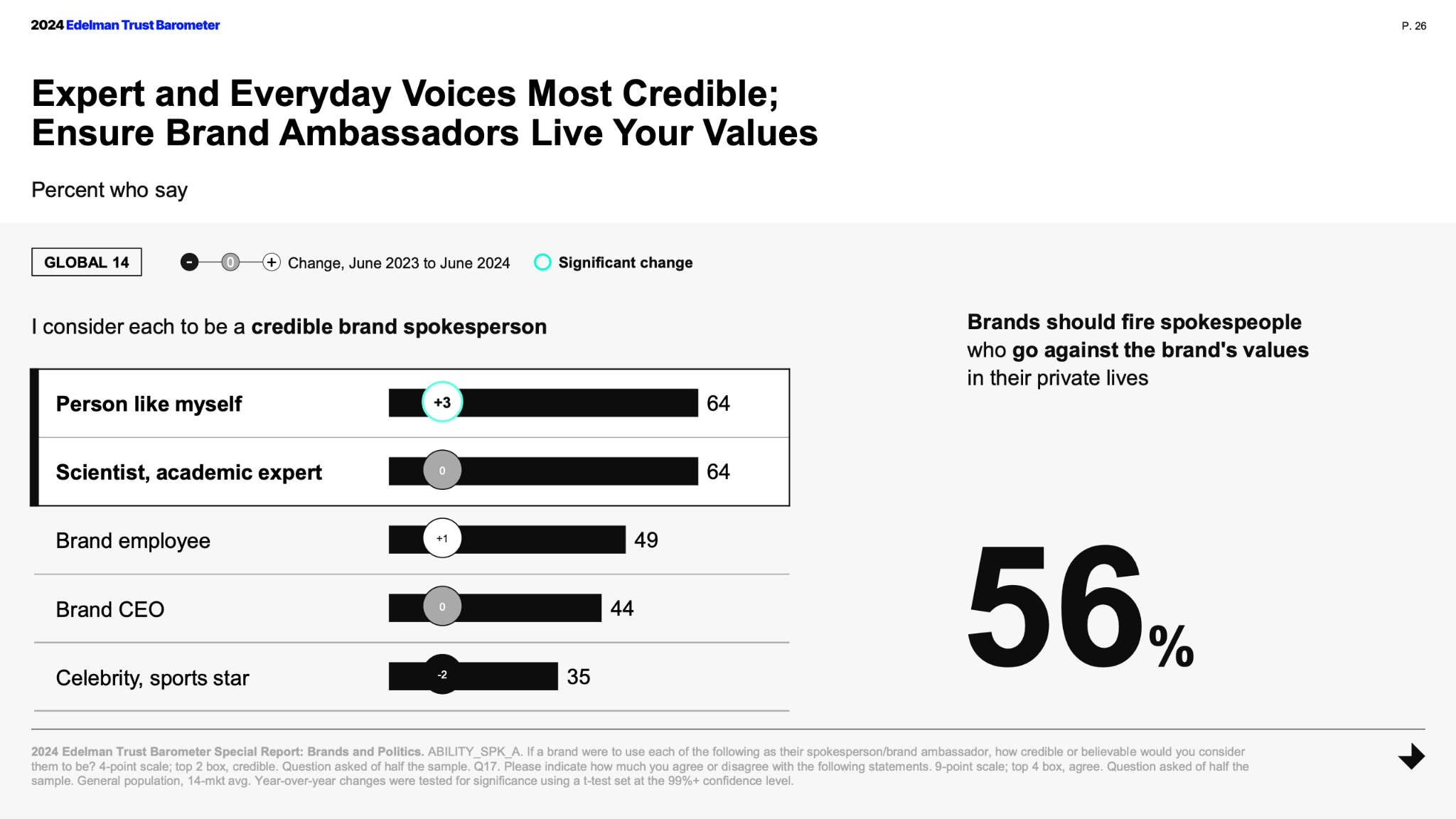
- Social proof. Reviews, testimonials, and user-generated content shape perception heavily. A strong brand doesn't just tell people it's trustworthy, it shows them through the experiences of other customers. This lines up with what Edelman's 2024 research found on credibility: "a person like myself" and academic experts are seen as credible brand spokespeople by 64% of consumers, compared to just 44% for a brand's own CEO and 35% for a celebrity or sports star. People trust people like them, and real experts, far more than they trust polished corporate or celebrity messaging. That's exactly why genuine reviews and UGC tend to outperform brand-produced content on trust.
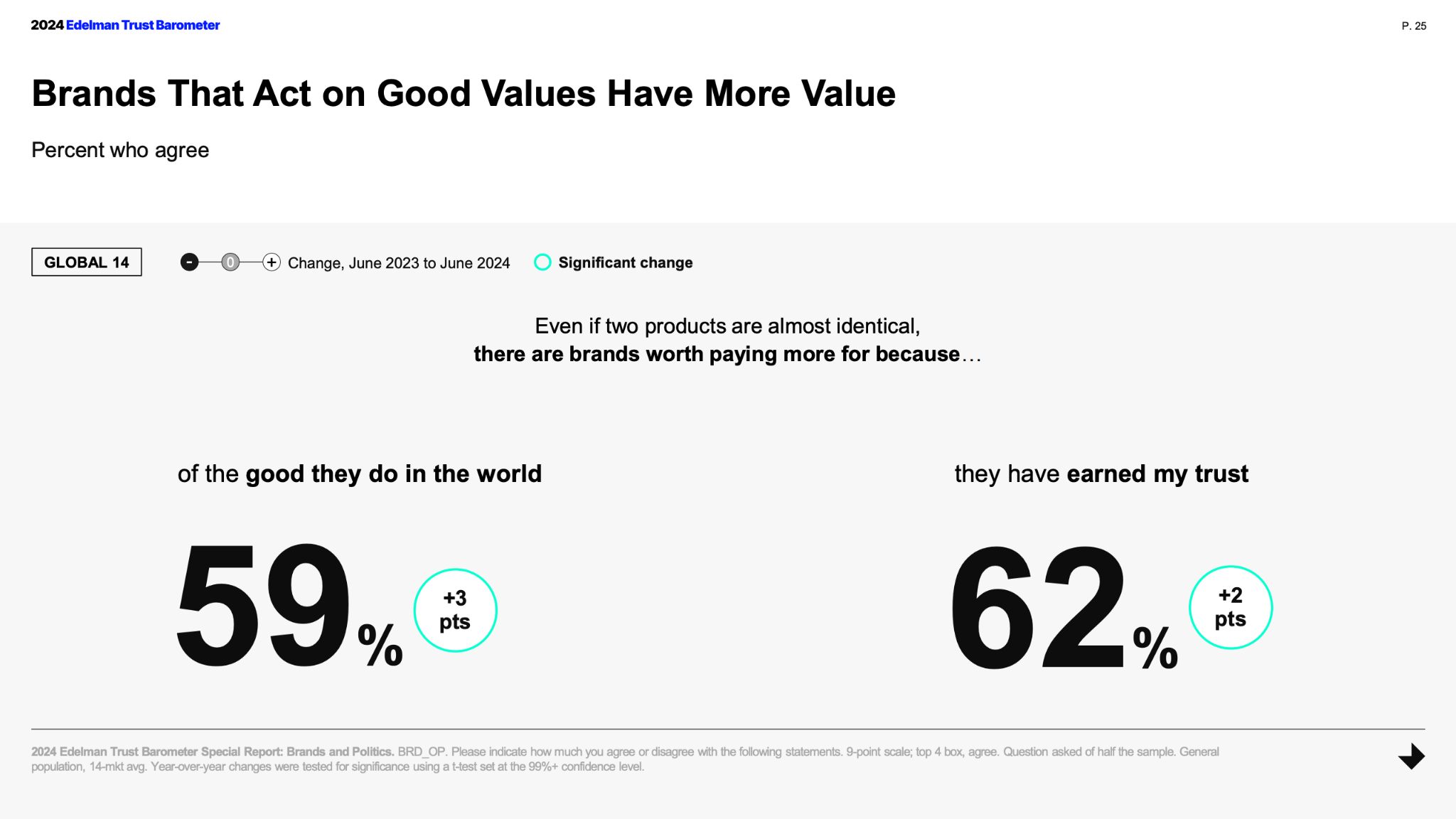
- Values and positioning. A growing share of consumers say a company's stated values genuinely influence their purchase decisions. Vague or generic positioning ("we care about quality") doesn't land the way a specific, honest point of view does. 62% of consumers say they're willing to pay more for a brand that has earned their trust, and 59% say the same for a brand that does good in the world. Values aren't just a "nice to have" on your About page, they show up directly in what customers are willing to pay.
How Branding Drives Customer Loyalty
Getting the first purchase is one thing. Getting the fifth is where branding really pays off.
It builds emotional connection, not just recognition. Loyalty rarely comes from having the lowest price. It comes from customers feeling like they understand your business and what it stands for. Brands with a clear identity and consistent experience are the ones customers default back to, even when a cheaper option is one search away.
It reduces decision fatigue. A well-known, trusted brand removes the need for a customer to re-evaluate their choice every time. That's a major advantage in categories with a lot of competing options.
It increases customer lifetime value. Loyal customers buy more often, spend more per order, and are far more likely to refer others. Many consumers report a willingness to pay more to stick with brands they already trust and feel loyal to, which has a direct impact on margin, not just top-line revenue.
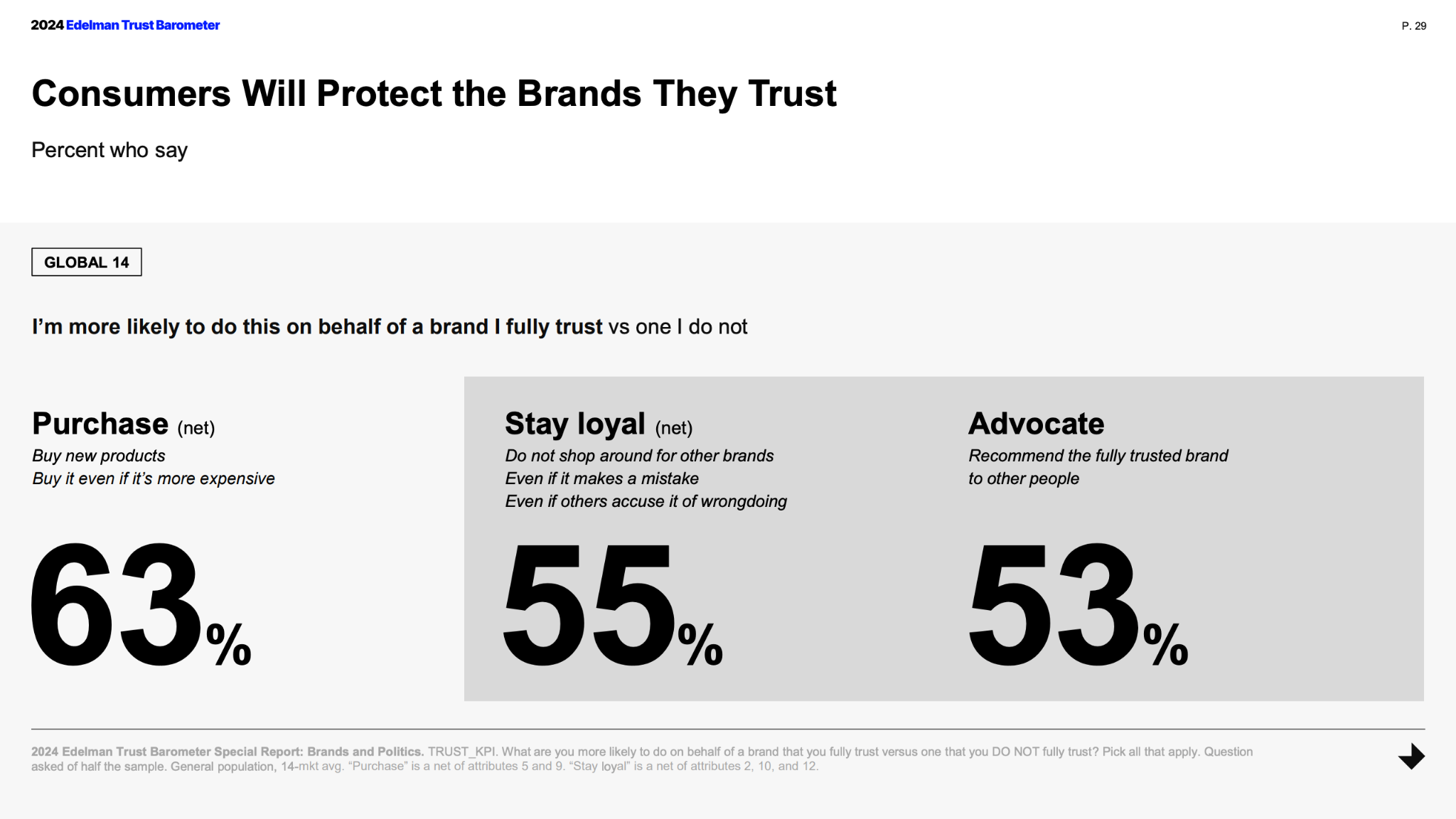
The numbers back this up. Edelman's 2024 Trust Barometer found that consumers who fully trust a brand are 63% more likely to purchase from it, 55% more likely to stay loyal (meaning they won't shop around, even if the brand makes a mistake), and 53% more likely to actively recommend it to others. That's the compounding value of trust: it doesn't just win a sale, it protects future sales and turns customers into unpaid advocates.
It protects you when things go wrong. No business is perfect. Strong brands earn enough goodwill that customers give them the benefit of the doubt during a bad experience, rather than churning immediately.
Practical Ways to Strengthen Your Brand in the Digital Age
You don't need a full rebrand to start seeing results. Some practical starting points:
- Audit your consistency. Look at your website, social channels, email templates, and ads side by side. Do they look and sound like the same business? If not, start there.
- Document your brand guidelines. Most businesses have some brand assets, but far fewer actually maintain and enforce written guidelines for tone, color, imagery, and messaging. Written guidelines make it much easier for your whole team, and any agency you work with, to stay aligned.
- Align your UX with your brand promise. If your brand promises simplicity, your checkout process should not have seven steps. Perception is shaped by experience, not just visuals.
- Use real social proof. Weave genuine reviews, case studies, and testimonials into your website and marketing, not just your homepage.
- Test before you commit. If you're considering changes to messaging, visuals, or UX, A/B testing lets you validate what actually improves trust and conversion, rather than guessing.
Branding and CRO Are Two Sides of the Same Coin
Here's the part many businesses miss: branding and conversion rate optimization are not separate workstreams. A confusing or inconsistent brand experience is often the hidden reason a well-designed landing page still underperforms. When we run CRO and UX projects for clients, brand consistency is one of the first things we look at, because no amount of button color testing will fix a site that doesn't feel trustworthy in the first three seconds.
If your business is investing heavily in ads, SEO, or social media without a clear, consistent brand behind it, you're likely leaving conversions and loyalty on the table.
Final Thoughts
Branding in the digital age isn't a one-time project. It's an ongoing discipline that touches your website, your UX, your social presence, and every piece of content you publish. Businesses that treat it as a strategic priority, not just a design task, consistently see the payoff in trust, conversions, and long-term customer loyalty.
If you're not sure whether your current branding is helping or holding back your conversions, that's exactly the kind of thing a fresh set of expert eyes can spot quickly.
Want to know how your brand is actually performing with real customers? Book a free consultation with our team and we'll walk you through practical, actionable ways to strengthen it.
Book a Free Website Consultation
Discover quick wins for your digital strategy. 100% guaranteed.